
Protein Molecular Weight Markers

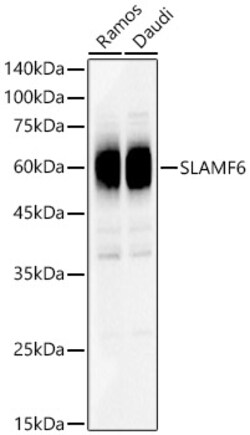
ABclonal Technology SLAMF6 Rabbit pAb

The protein encoded by this gene is a type I transmembrane protein, belonging to the CD2 subfamily of the immunoglobulin superfamily. This encoded protein is expressed on Natural killer (NK), T, and B lymphocytes. It undergoes tyrosine phosphorylation and associates with the Src homology 2 domain-containing protein (SH2D1A) as well as with SH2 domain-containing phosphatases (SHPs). It functions as a coreceptor in the process of NK cell activation. It can also mediate inhibitory signals in NK cells from X-linked lymphoproliferative patients. Alternative splicing results in multiple transcript variants encoding distinct isoforms.

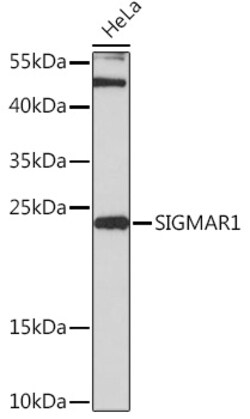
ABclonal Technology SIGMAR1 Rabbit pAb
This gene encodes a receptor protein that interacts with a variety of psychotomimetic drugs, including cocaine and amphetamines. The receptor is believed to play an important role in the cellular functions of various tissues associated with the endocrine, immune, and nervous systems. As indicated by its previous name, opioid receptor sigma 1 (OPRS1), the product of this gene was erroneously thought to function as an opioid receptor, it is now thought to be a non-opioid receptor. Mutations in this gene has been associated with juvenile amyotrophic lateral sclerosis 16. Alternative splicing of this gene results in transcript variants encoding distinct isoforms.

Biotium Primary Antibody PSD95 rK28/43 CF790 1/EA
PSD95 (rK28/43)is a recombinant mouse monoclonal antibody that recognizes PSD95 This CF790 antibody conjugate has been validated in Immunofluorescence CF and reg dyes are Biotiums line of next-generation fluorescent dyes with advantages in brightness and photostability

Biotium Primary Antibody Human IgG Fc N2508.HFC CF660R 1/EA
Anti-Human IgG (Fc) rVHH (N2508 HFC) is a recombinant Alpaca VHH antibody that recognizes the Fc domain of human IgG and is validated for IF and flow Far-red fluorescent photostable CF660R dye has Ex/Em at 663/682 nm Unit size 500 uL at 0 1 mg/mL

Biotium Primary Antibody Neurofilament H rRmdO-20 CF790 1/EA
Neurofilament-H (rRmdO-20) is a recombinant mouse monoclonal antibody that recognizes Neurofilament-H This CF790 antibody conjugate has been validated in Immunofluorescence CF and reg dyes are Biotiums line of next-generation fluorescent dyes with advantages in brightness and photostability
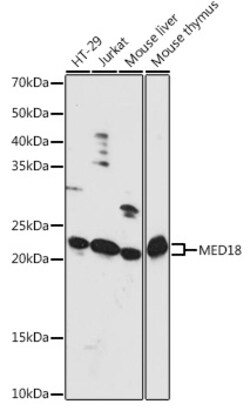
ABclonal Technology MED18 Rabbit pAb
MED18 is a component of the Mediator complex, which is a coactivator for DNA-binding factors that activate transcription via RNA polymerase II (Sato et al., 2003 [PubMed 12584197]).

OriGene MYC/DDK Tagged Western Blot Molecular Weight Markers, 50 ug
Pre-mixed molecular weight markers with 6 over-expressed cell lysates with Myc/DDK tags covering 28 to 158 KDa. Each Vial contains 50ug total protein per tube; Sufficient for 20 loads.

Cell Signaling Technology Color-coded Prestained Protein Marker, Low Range (1.7-42 kDa) 250 µl
Color-coded Prestained Protein Marker, Low Range (1.7-42 kDa) 250 µl

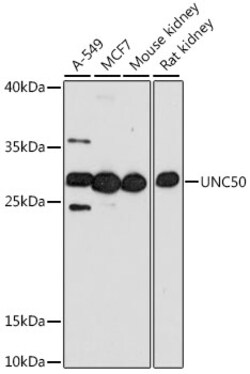
ABclonal Technology UNC50 Rabbit pAb
Predicted to enable RNA binding activity. Predicted to be involved in protein localization to cell surface. Predicted to be located in Golgi apparatus and nuclear inner membrane. Predicted to be integral component of Golgi membrane.
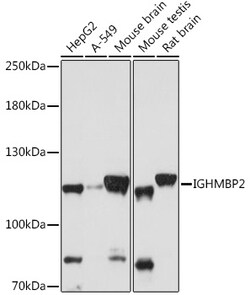
ABclonal Technology IGHMBP2 Rabbit pAb
This gene encodes a helicase superfamily member that binds a specific DNA sequence from the immunoglobulin mu chain switch region. Mutations in this gene lead to spinal muscle atrophy with respiratory distress type 1.
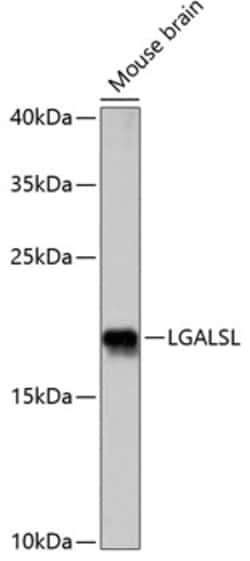
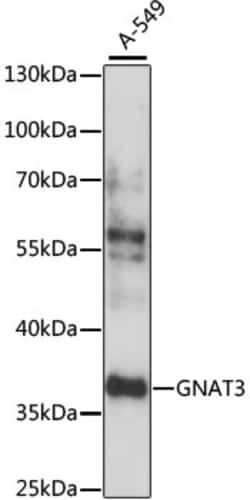
ABclonal Technology GNAT3 Rabbit pAb
Sweet, bitter, and umami tastes are transmitted from taste receptors by a specific guanine nucleotide binding protein. The protein encoded by this gene is the alpha subunit of this heterotrimeric G protein, which is found not only in the oral epithelium but also in gut tissues. Variations in this gene have been linked to metabolic syndrome.
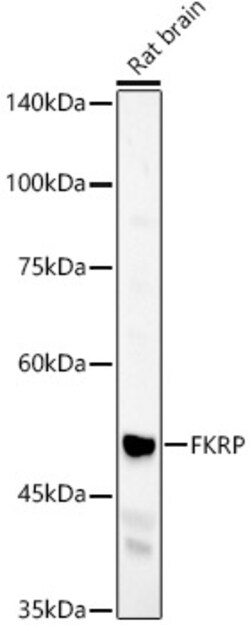
ABclonal Technology FKRP Rabbit pAb
This gene encodes a protein which is targeted to the medial Golgi apparatus and is necessary for posttranslational modification of dystroglycan. Mutations in this gene have been associated with congenital muscular dystrophy, cognitive disability, and cerebellar cysts. Several alternatively spliced transcript variants of this gene have been described, but the full-length nature of some of these variants has not been determined.
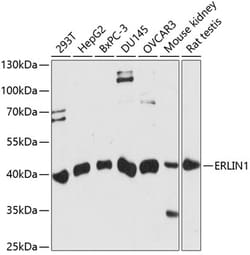
ABclonal Technology ERLIN1 Rabbit pAb
The protein encoded by this gene is part of a protein complex that mediates degradation of inositol 1,4,5-trisphosphate receptors in the endoplasmic reticulum. The encoded protein also binds cholesterol and regulates the SREBP signaling pathway, which promotes cellular cholesterol homeostasis. Defects in this gene have been associated with spastic paraplegia 62.
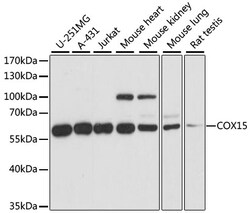
ABclonal Technology COX15 Rabbit pAb
Cytochrome c oxidase (COX), the terminal component of the mitochondrial respiratory chain, catalyzes the electron transfer from reduced cytochrome c to oxygen. This component is a heteromeric complex consisting of 3 catalytic subunits encoded by mitochondrial genes and multiple structural subunits encoded by nuclear genes. The mitochondrially-encoded subunits function in electron transfer, and the nuclear-encoded subunits may function in the regulation and assembly of the complex. This nuclear gene encodes a protein which is not a structural subunit, but may be essential for the biogenesis of COX formation and may function in the hydroxylation of heme O, according to the yeast mutant studies. This protein is predicted to contain 5 transmembrane domains localized in the mitochondrial inner membrane. Alternative splicing of this gene generates two transcript variants diverging in the 3 region.